Archaeological Knowledge Graph

From evidence
to interpretation,
transparently.

Extended Matrix is a formal language for documenting stratigraphic sequences and virtual reconstruction processes — designed to be readable by people, processable by machines.

Why EM exists

Make your interpretive choices visible.

Most virtual reconstructions look certain even when the evidence beneath them is fragmentary, contested, or simply missing. Extended Matrix lets archaeologists record what was found, how it was read, and where the reconstruction goes beyond the data — so colleagues, reviewers and the public can see the reasoning, not just the result.

From the stratigraphic sequence on site to the published 3D scene, every interpretive step stays linked to the source that justifies it.

See it in practice

One graph, four ways to look at it.

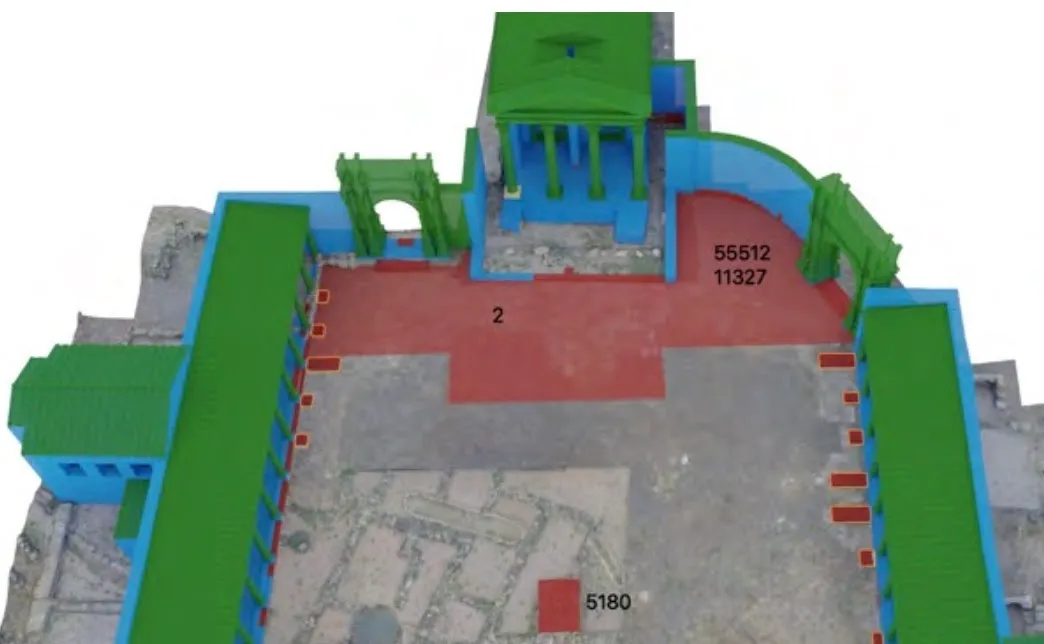
The same EM data shows up in the photogrammetric model, in the stratigraphic graph, in the project's data tree, and in the public Heriverse scene — each view is a different reading of the same knowledge.

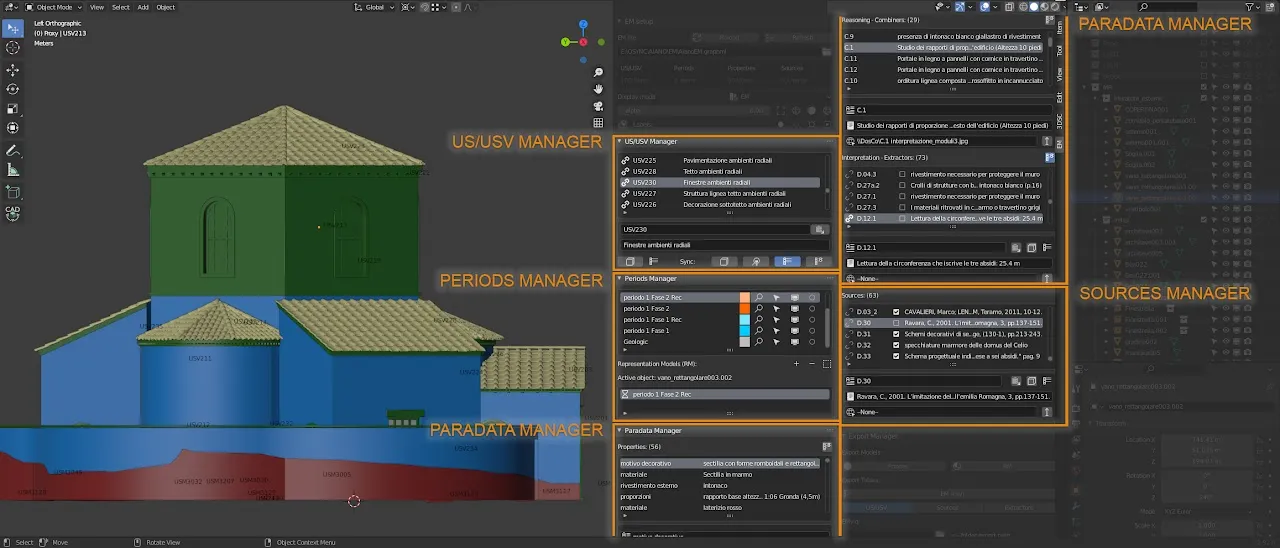
3D viewport — proxies on photogrammetric model
Blender 3D viewport showing semi-transparent proxy boxes overlaid on a photogrammetric model
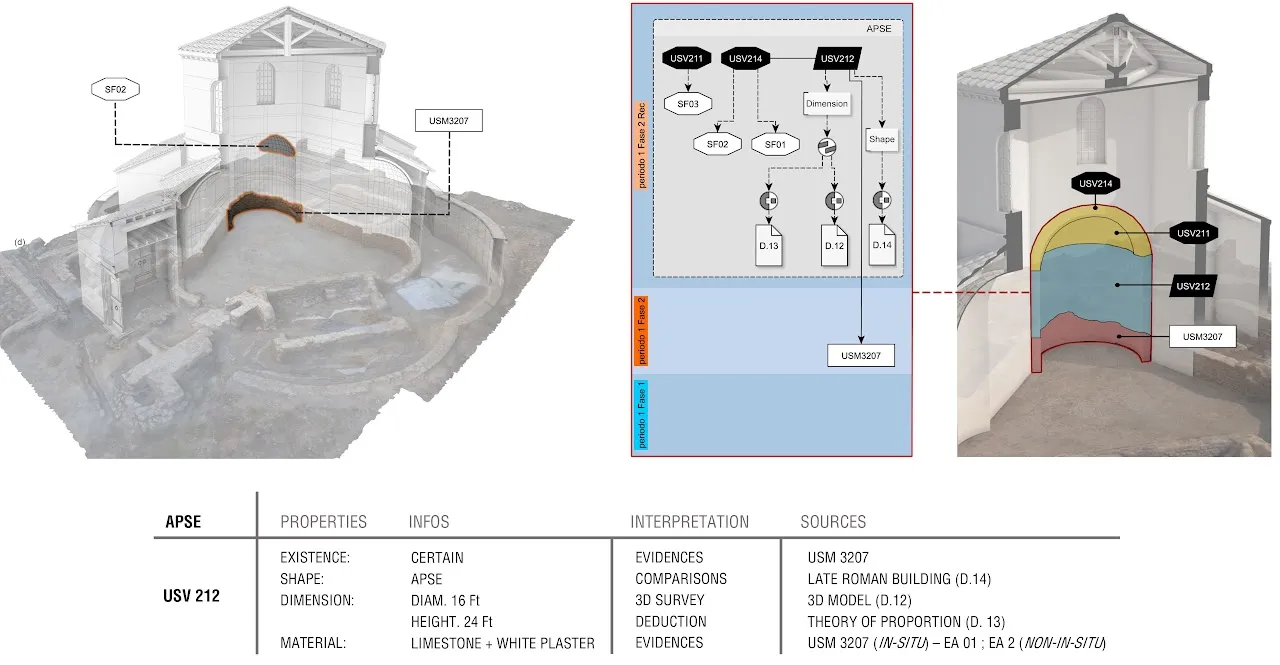
EM graph — yEd / Graph Editor
Extended Matrix graph in yEd showing stratigraphic units, properties and document nodes connected by typed edges
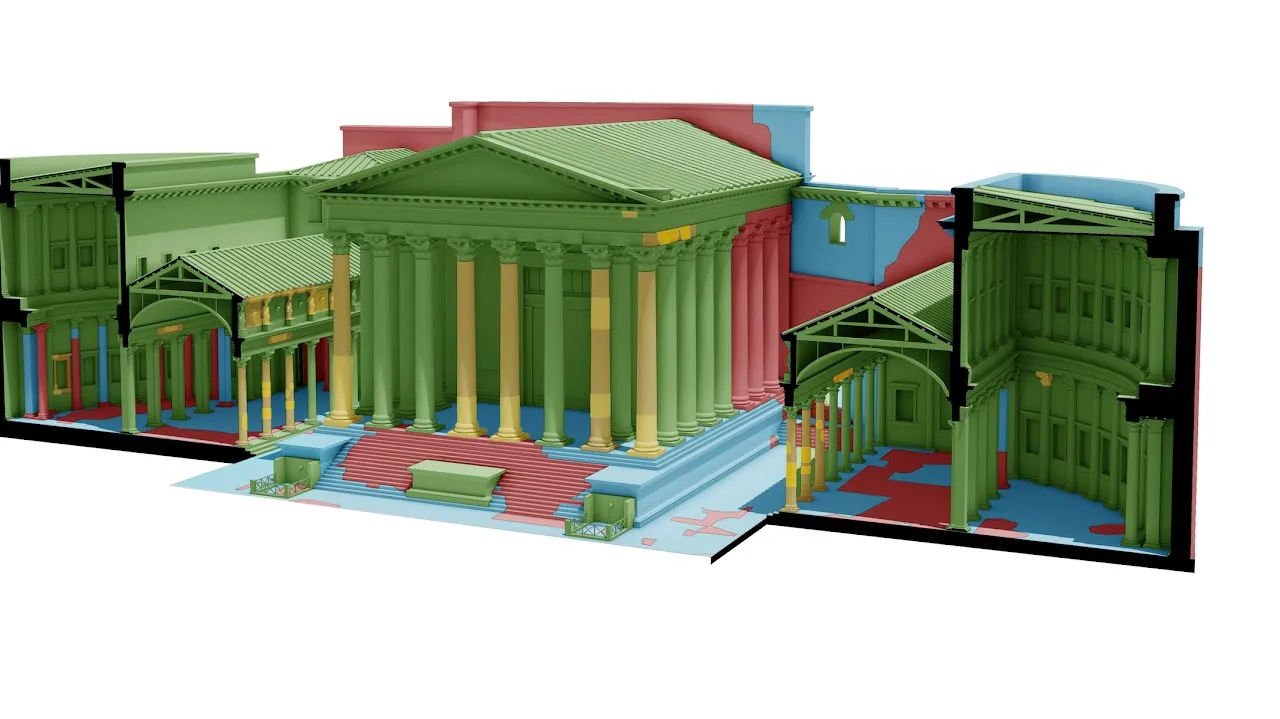
Stratigraphy data tree — Blender side panel
EMtools side panel in Blender showing the stratigraphic data tree of US, USV, documents, extractions and properties
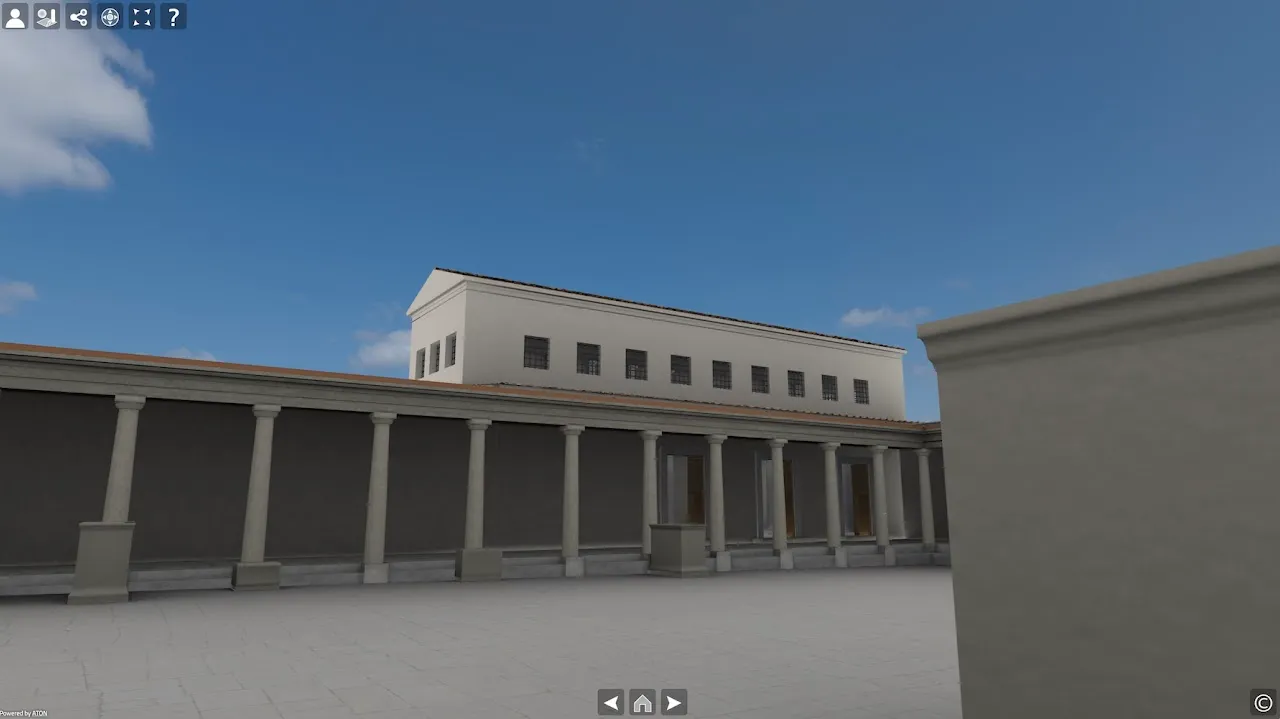
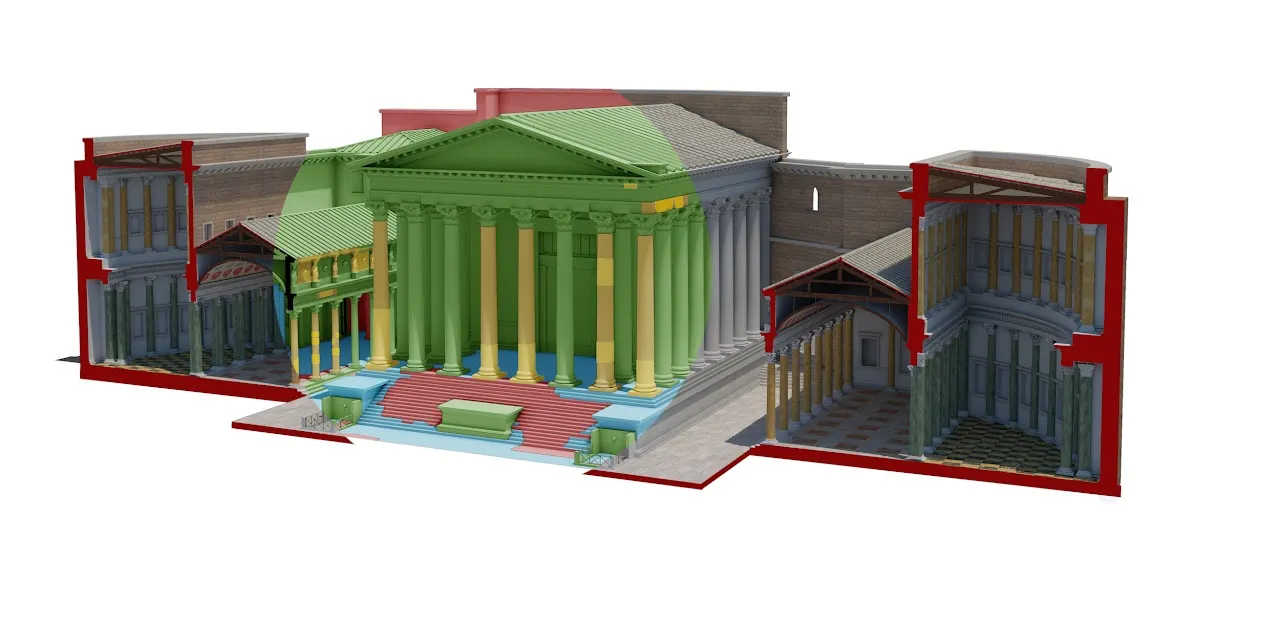
Heriverse — collaborative web scene
Heriverse web scene with a 3D reconstruction, paradata pop-up and collaborator cursors
See it live

Explore a reconstruction in your browser.

Below is a live Heriverse scene — the same EM data you saw above, published as an interactive 3D experience. Walk through the reconstruction, click on a unit, read the paradata that justifies each interpretive choice.

Or open the live experience in a new tab →

Coming soon: the underlying open dataset will be released on the Extended Matrix Zenodo community (versioned, citable), accompanied by a data paper in Heritage (MDPI).

Under the hood

EM is the score.
s3dgraphy plays it.

Like a musical score versus its MIDI encoding, Extended Matrix is the human-readable notation: it can live on paper, in yEd, or in an AI-extracted spreadsheet. The s3dgraphy Python library makes that notation computable — and the rest of the framework brings it into Blender, into the web, into VR.

The property graph already carries CIDOC-CRM mappings, making EM data interoperable with the broader cultural heritage ecosystem.

Pick your starting point →
INPUTS OUTPUTS yEd GraphML XLSX (StratiMiner) PyArchInit DB s3dgraphy Python library Blender (EM Tools) Web (Heriverse) VR / AR runtime CIDOC-CRM RDF

One graph, many surfaces. s3dgraphy ingests EM from any notation and serves it to any consumer.

Modular by design

A framework, not a single application.

The EM Framework is split into focused components — yEd palette, s3dgraphy, EM Tools, 3DSC, Heriverse — each with its own repository, documentation and release cycle. You pick what you need. The shared graph format keeps every piece in sync.

Bringing EM into another platform — Revit, 3ds Max, Unity, Unreal, a CLI batch job — is a pip install s3dgraphy away. The data model is the same everywhere, including its CIDOC-CRM mapping.

Built on standards

Long-term support, real interoperability.

Extended Matrix is part of the European research infrastructure for cultural heritage. It is committed to long-term standardisation, formal mapping to community ontologies, and integration with the emerging European Collaborative Cloud.

Built on community standards

EM 1.6 ships an alignment to the ISO CIDOC-CRM ontology — stable from the StratiGraph release cycle — together with a dedicated EM extension to CIDOC-CRM for archaeology-specific concepts. EM 1.6 also aligns to the Heritage Digital Twin Ontology (HDTO) developed in ECHOES for the ECCCH ecosystem. Your data plugs into the broader cultural-heritage standards layer.

Long-term support, by design

From version 1.4, the formal language follows a long-term support cycle: a stable release is maintained for years so research projects — which often span multiple years — can build on a fixed target without churn. Backward compatibility is structural to EM: at any point you can move forward to the latest version and gain new language features and tooling without losing your work.

View detailed release status & development projects →

StratiGraph → ECCCH (2025–2029)

Extended Matrix is being matured (2025–2029) within the StratiGraph project, funded under the European Collaborative Cloud for Cultural Heritage (ECCCH). StratiGraph hardens EM as shared infrastructure: governance, versioning, validation suite, CIDOC-CRM/HDTO mapping, reference triplestore export. The outcome reaches users through first-class EM Tools and Heriverse connectors to the federated ECCCH nodes.

Citing EM

Used EM in a paper? Cite it the right way.

Extended Matrix grows version after version. The 2015 foundation paper is always cited; each release additionally contributes a flag paper you cite when you used features it introduced. The How to cite EM page assembles the full list per version, with ready-made BibTeX, and links to the canonical References and Glossary pages of the language documentation.

How to cite EM →
Open data

EM datasets on Zenodo.

Reference datasets, training material and case-study GraphML can be deposited on the Extended Matrix Zenodo community — every deposit gets a DOI and is preserved for the long term. The first fully downloadable case study (the Great Temple of Sarmizegetusa) is being prepared, alongside a dedicated deposit protocol.

Coming soon: each released case study will be published as a versioned dataset on Zenodo and cited by an accompanying data paper in Heritage (MDPI), so the underlying evidence stays as citable as the reconstruction itself.

Browse the EM Zenodo community →
Used by & collaborations

Universities, research institutions, European projects.

EM is adopted, funded and co-developed by —

See the full list on the about page.